
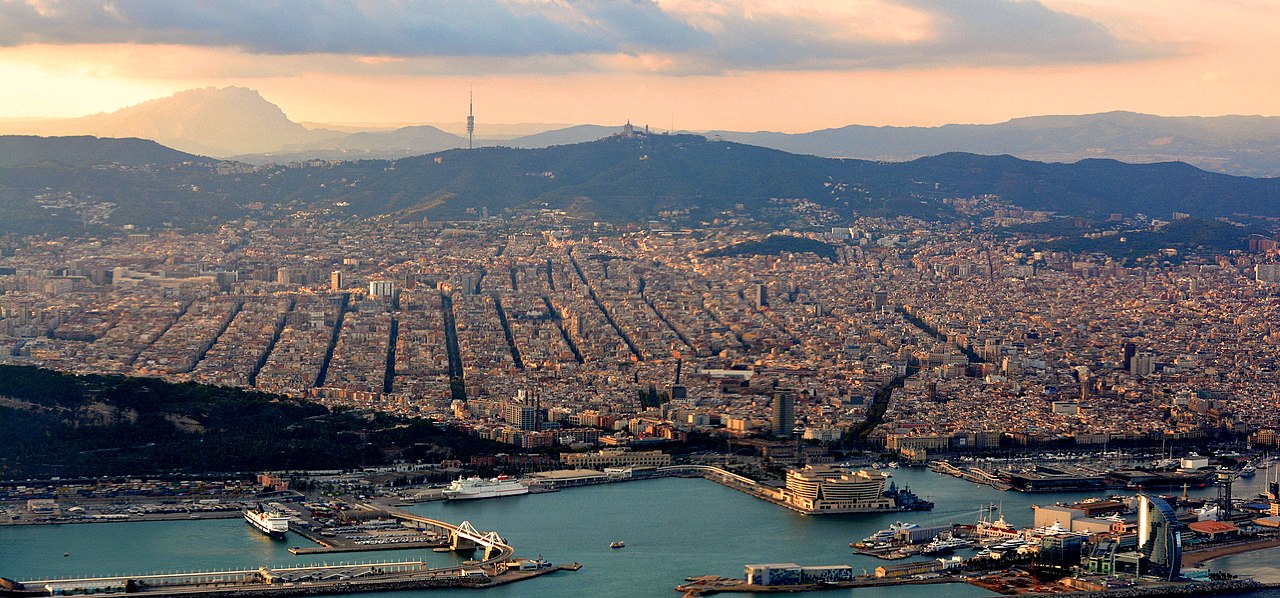
Barcelona 7-day itinerary
- Best for
- A slower week in Barcelona, with one day outside town.
- Pace
- Five walking days, one day trip, and one slower day.
- Base
- The old city
- Estimated budget
- $560–$1,960
Day-by-day plan
Follow the stops in order. Walk times are estimates between nearby places.
- Day 1
The old city
Walk The old city in Barcelona. Start at Catedral, then Museu d'Història de Barcelona and Plaça Reial. Stay on foot.
Stop 1
Catedral
Catedral is a listed stop in this neighborhood.
Stop 2
Museu d'Història de Barcelona
Museu d'Història de Barcelona is a listed stop in this neighborhood.
Stop 3
Plaça Reial
Plaça Reial is a listed stop in this neighborhood.
Stop 4
Sagrada Família
Basílica i Temple Expiatori de la Sagrada Família, or simply Sagrada Família, is a Catholic church that was under construction in the Eixample district of Barcelona, Catalonia, Spain. Designed by the Catalan architect Antoni Gaudí, it is the tallest church in the world. On 7 November 2010, Pope Benedict XVI consecrated the church and proclaimed it a basilica. In 2005, parts of the Sagrada Família were declared a UNESCO World Heritage Site, under "Works of Antoni Gaudí".
Eat · Barcelona Eat Local Food Tours: A family-owned business that showcases the best of Catalan gastronomy in off-the-beaten districts of Barcelona.
Browse Barcelona tours - Day 2
Modernist architecture
Walk Modernist architecture in Barcelona. Start at Casa Milà, then Casa Batlló and Palau Güell. Stay on foot.
Stop 1
Casa Milà
Casa Milà is a listed stop in this neighborhood.
Stop 2
Casa Batlló
Casa Batlló is a building in the center of Barcelona, Spain. It was designed by Antoni Gaudí, and is considered one of his masterpieces. A remodel of a previously built house, it was redesigned in 1904 by Gaudí and has been refurbished several times since. Gaudí's assistants Domènec Sugrañes i Gras, Josep Canaleta and Joan Rubió also contributed to the renovation project.
Stop 3
Palau Güell
The Palau Güell is a mansion designed by the architect Antoni Gaudí for the industrial tycoon Eusebi Güell, and was built between 1886 and 1888. It is situated on the Carrer Nou de la Rambla, in the El Raval neighborhood of Barcelona in Catalonia, Spain. It is part of the UNESCO World Heritage Site "Works of Antoni Gaudí".
Stop 4
Parc Güell
Parc Güell is a listed stop in this neighborhood.
Eat · Comer y no Bombas: Shares free vegan food.
- Day 3
Modernist architecture
Walk Modernist architecture in Barcelona. Start at Casa Vicens, then crypt of the Church and Palau de la Música Catalana. Stay on foot.
Stop 1
Casa Vicens
Casa Vicens is a modernist building situated in the Gràcia neighbourhood of Barcelona. It is the work of architect Antoni Gaudí and is considered to be his first major project. It was built between 1883 and 1885, although Gaudí drew up the initial plans between 1878 and 1880. The work belongs to the orientalist style, similar to Neo-Mudéjar architecture, although interpreted in Gaudí’s own personal way, with a uniqueness that only he knew how to add to his projects.
Stop 2
crypt of the Church
crypt of the Church is a listed stop in this neighborhood.
Stop 3
Palau de la Música Catalana
Palau de la Música Catalana is a concert hall in Barcelona, Catalonia, Spain. Designed in the Catalan modernista style by the architect Lluís Domènech i Montaner, it was built between 1905 and 1908 for Orfeó Català, a choral society founded in 1891 that was a leading force in the Catalan cultural movement that came to be known as the Renaixença. It was inaugurated on 9 February 1908.
Stop 4
Hospital de Sant Pau
The former Hospital de la Santa Creu i Sant Pau in the neighborhood of El Guinardó, Barcelona, Catalonia, Spain, is a complex built between 1901 and 1930. It is one of the most prominent works of the Catalan modernisme architect Lluís Domènech i Montaner. The complex was listed as a Conjunto Histórico in 1978. Together with Palau de la Música Catalana, it was declared a UNESCO World Heritage Site in 1997.
Eat · El Glop: Three locations, in Eixample and Gràcia. Excellent mid-range Catalan meals. Allow about €20 per person, although you could get out of there for half of that if you let the price dictate your choice of dishes.
- Day 4
With children
Walk With children in Barcelona. Start at Tibidabo Mountain amusement park, then Mesquita Shah Jalal Jame and Teatre Tantarantana. Stay on foot.
Stop 1
Tibidabo Mountain amusement park
Tibidabo is a popular attraction with stunning vistas, an historic amusement park, and the iconic Sagrat Cor church.
Stop 2
Mesquita Shah Jalal Jame
Mesquita Shah Jalal Jame on OpenStreetMap within walking or short-transit range.
Stop 3 · 4 min walk
Teatre Tantarantana
See also ca:Teatre Tantarantana.
Stop 4 · 27 min walk
Barcelona a Prim
See also ca:Barcelona a Prim. Historic: memorial. Tourism: artwork.
Eat · Balordi: Located near Plaça d’Espanya. Casual Italian street-food spot specialising in panini and handmade meatballs. Expect bold flavours and quick counter service, with a few sidewalk benches for eating in. Allow about €10–15 per person depending on your choice.
- Day 5
City
Walk City in Barcelona, including Homenatge als castellers and Teatre Romea.
Stop 1
Homenatge als castellers
See also ca:Homenatge als castellers. Historic: monument.
Stop 2 · 7 min walk
Teatre Romea
theatre in Barcelona, Spain (occasionally used as a cinema in the past)
Eat · Barcelona Eat Local Food Tours: A family-owned business that showcases the best of Catalan gastronomy in off-the-beaten districts of Barcelona.
- Day 6
Day trip toward Canet de Mar
Leave Barcelona for the day. Come back to the same bed.
Stop 1
Canet de Mar
Listed as a next stop from Barcelona. Check the regional train or bus the night before.
Stop 2
Catalonia
Listed as a next stop from Barcelona. Check the regional train or bus the night before.
Stop 3
Colònia Güell
Listed as a next stop from Barcelona. Check the regional train or bus the night before.
Eat · Pack snacks from town. Do not count on a full menu at a small station.
Browse Canet de Mar day trips - Day 7
Do one thing slowly
No new neighborhood. Use the spare day on a single activity.
Stop 1
La Rambla
La Rambla is a listed stop in this neighborhood.
Stop 2
Plaça de Catalunya
Plaça de Catalunya is a large square in central Barcelona that is generally considered to be both its city centre and the place where the old city and the 19th century-built Eixample meet.
Stop 3
Portal de l'Àngel
Portal de l'Àngel is a pedestrian street in the Ciutat Vella district of Barcelona adjacent to Plaça Catalunya and part of the large shopping area that spans from Avinguda Diagonal to Barri Gòtic. It's one of the city's most visited streets and is always crowded with tourists and locals all year round.
Stop 4
Artoba Tours
City and day tours of Barcelona and Catalonia led by a professional archaeologist.
Eat · Go back to a place that already worked.
Where to stay
Sleep near the walking base. Pick an area, then search hotels by neighborhood.
The old city
Walking this plan
Base here if you want Catedral, Museu d'Història de Barcelona, Plaça Reial on foot.
Modernist architecture
Walking this plan
Base here if you want Sagrada Família, Casa Milà, Casa Batlló on foot.
Things to book
Tours and tickets that match this plan. Book anything that needs timed entry.
Budget
Rough mid-range spend for 7 days in Barcelona, excluding long-haul flights. Hotel nights drive most of the range.
- Budget: about $560 (hostel/budget hotel, transit, street food)
- Mid-range: about $980 (3★ hotel, sit-down meals, a tour or two)
- Comfort: about $1,960 (nicer hotel, taxis, paid attractions)
Transportation
Get in
thumbnail|right|Barcelona International Airport The main airport is ( ). Some low-cost carriers, notably Ryanair, use the airports of Girona ( ), nearly to the north, or Reus ( ), around the same distance to the south, instead. Since Ryanair started operating at BCN, you should check carefully where your flight goes. The three-letter IATA code should be part of your booking process.
Get around
The public transport in the city and the surrounding area managed by Autoritat del Transport Metropolità (ATM) consortium who provide information about services by all operators. The whole area is covered by the Integrated Fare System, which is divided into 6 zones. This system includes the most of the public transport in the area: metro, city and intercity bus, tram and commuter trains. Like most major European cities Barcelona has moved to a rechargeable ticketing system called T-mobilitat..
Where to eat
Simple meal ideas near the day’s walking route.
Barcelona Eat Local Food Tours
A family-owned business that showcases the best of Catalan gastronomy in off-the-beaten districts of Barcelona.
Comer y no Bombas
Shares free vegan food.
El Glop
Three locations, in Eixample and Gràcia. Excellent mid-range Catalan meals. Allow about €20 per person, although you could get out of there for half of that if you let the price dictate your choice of dishes.
Balordi
Located near Plaça d’Espanya. Casual Italian street-food spot specialising in panini and handmade meatballs. Expect bold flavours and quick counter service, with a few sidewalk benches for eating in. Allow about €10–15 per person depending on your choice.
Optional alternatives
Add one if a walking day finishes early. Don’t stack them onto the same afternoon.
Spanish Civil War tours
Walking tour of Barcelona visiting key sites relating to the Spanish Civil War, covering themes such as Anarchism, the International Brigades, George Orwell and the realities of daily life and bombing during the war.
Circuit de Barcelona-Catalunya
The Circuit de Barcelona-Catalunya is a 4.657 km (2.894 mi) motorsport race track in Montmeló, Barcelona, Catalonia, Spain. With long straights and a variety of corners, the Circuit de Barcelona-Catalunya is seen as an all-rounder circuit. The track has stands with a capacity of 140,700. The circuit has FIA Grade 1 license.
Sónar
An annual three-day music festival. It is described officially as a festival of Advanced Music and Multimedia Art. Music is by far the main aspect of the festival. The festival runs for three days and nights, usually starting on a Thursday in the third week of June. There is a day location and a night location.
Monegros Desert Festival
The most famous and biggest one day/night electronic music festivals in Spain is in the desert of Fraga, km|200
Festes de la Mercè
Barcelona's main annual festival around 24 September, encompassing many events such as human towers (castellers), free live music events on the streets, firework displays, and processions of wooden giants. It is a holiday and the city offers a lot of activities to have fun. Enjoy a fountains and fireworks show at the base of the Montjuïc hill.
Festes de Gràcia
The Festes de Gracia is a Catalonian celebration, held around 15 August each year to commemorate the Assumption. During the week of festivities that mark one of Barcelona's most important fiestas, the city of Gracia explodes with fun, excitement, colour, and fireworks.
Before you go
Questions
- Do I need a car in Barcelona?
- No for this plan. The days stay inside walking range, then local transit to BCN. The public transport in the city and the surrounding area managed by Autoritat del Transport Metropolità (ATM) consortium who provide information about services by all operators. The whole area is covered by the Integrated Fare System, which is divided into 6 zones. This system includes the most of the public transport in the area: metro, city and intercity bus, tram and commuter trains. Like most major European cities Barcelona has moved to a rechargeable ticketing system called T-mobilitat..
- Is 7 days enough?
- Yes if you want Barcelona plus day trips. Use the 5-day plan if you will stay in town.
- Where should I stay?
- Base near The old city so the first walking day starts at the hotel. Hotel Millenni is a listed option, not a ranking.
- Where do I eat?
- Each day names one sit-down stop. Barcelona Eat Local Food Tours is on the list. Keep the rest as bakeries and market counters.
Other Barcelona trip lengths
- Where to stay in Barcelona
- Best time to visit Barcelona
- eSIM for Spain
- Travel insurance for Spain
- Airport transfers
Daily stops compiled from Wikivoyage (CC BY-SA), Wikipedia, OpenStreetMap, and OpenTripMap. Updated 2026-08-25. Edited by Lina Varela.