
City guide · Portugal
Porto
Porto, also known in English as Oporto, is the second largest city in Portugal, after Lisbon.
4 ready itineraries · 3, 5, 7, 10-day plans
Porto, also known in English as Oporto, is the second largest city in Portugal, after Lisbon. It is the capital of the Porto District and one of the Iberian Peninsula's major urban areas.
Porto city proper, which is the entire municipality of Porto, is small compared to its metropolitan area, with an estimated population of 273,476 people in a municipal area of 41.42 km2 (16 sq mi). As of 2025, the Porto metropolitan area has around 1.9 million people in an area of 2,395 km2 (925 sq mi), making it the second-largest urban area in Portugal.
- Best for
- First-time visitors who want Porto without a car. The 3-day plan stays inside walking range of City centre.
- Skip if
- Skip Porto if you only want a beach week or an airport layover. This cluster is for people who will walk most days.
Pick a trip length
One plan per length — open it and walk the days in order.
- 3days3-day itineraryA long weekend walking Porto.Open plan →
- 5days5-day itineraryPopularA first visit to Porto with room for one extra neighborhood.Open plan →
- 7days7-day itineraryA slower week in Porto, with one day outside town.Open plan →
- 10days10-day itineraryFirst-time visitors who want a full Porto trip with day trips.Open plan →
5-day preview
Skim the walking days, then open the full plan.
- 1
City centre
Walk City centre in Porto. Start at Palácio da Bolsa, then Sé do Porto and Port Wine Institute. Stay on foot.
Palácio da Bolsa · Sé do Porto · Port Wine Institute · City Hall · …
- 2
West of city centre
Walk West of city centre in Porto. Start at Museu do Vinho do Porto, then Pavilhão Rosa Mota and Museu Romântico. Stay on foot.
Museu do Vinho do Porto · Pavilhão Rosa Mota · Museu Romântico
- 3
Boavista
Walk Boavista in Porto, including Casa da Música and Fundação de Serralves.
Casa da Música · Fundação de Serralves
- 4
Foz do Douro
Walk Foz do Douro in Porto, including Castelo Do Queijo and She Changes.
Castelo Do Queijo · She Changes
- 5
Day trip toward Vila Nova de Gaia
Leave Porto for the day. Come back to the same bed.
Vila Nova de Gaia · Matosinhos · Espinho
Where to stay
Bases that fit the walking plan.
City centre
2 to 4 nights
Walking this plan
Base here if you want Palácio da Bolsa, Sé do Porto, Port Wine Institute on foot.
West of city centre
2 to 4 nights
Walking this plan
Base here if you want Museu do Vinho do Porto, Pavilhão Rosa Mota, Museu Romântico on foot.
Boavista
2 to 4 nights
Walking this plan
Base here if you want Casa da Música, Fundação de Serralves on foot.
Foz do Douro
2 to 4 nights
Walking this plan
Base here if you want Castelo Do Queijo, She Changes on foot.
Getting there & when to go
Lock timing and airport basics early.
Best time
Porto works year-round for a walking trip. Shoulder months are easier on crowds and hills.
- Shoulder months
- High season
- Low season
- Rain days
Airport
Francisco Sá Carneiro Airport (OPO)
thumb|Porto Valley Porto, like most Portuguese cities, is a nightmare to drive in. Roads vary in conditions - from fully paved to cobbled lanes that can make even the most shortest of distance seem like a go-kart rally. With that said, keep in mind that the tourist parts of the city (the Ribeira and Baixa) are a never ending maze of narrow streets, short tempered drivers and snakelike alleys. Better to walk (despite the fact that it's very hilly).
- Public transit from OPO30 to 60 minutes · Local ticket price. Check the operator the week you fly.
- Taxi or licensed ride hail20 to 45 minutes · Treat any number you see online as an estimate, not a quote.
Practical notes
Short reads before you book.
Understand
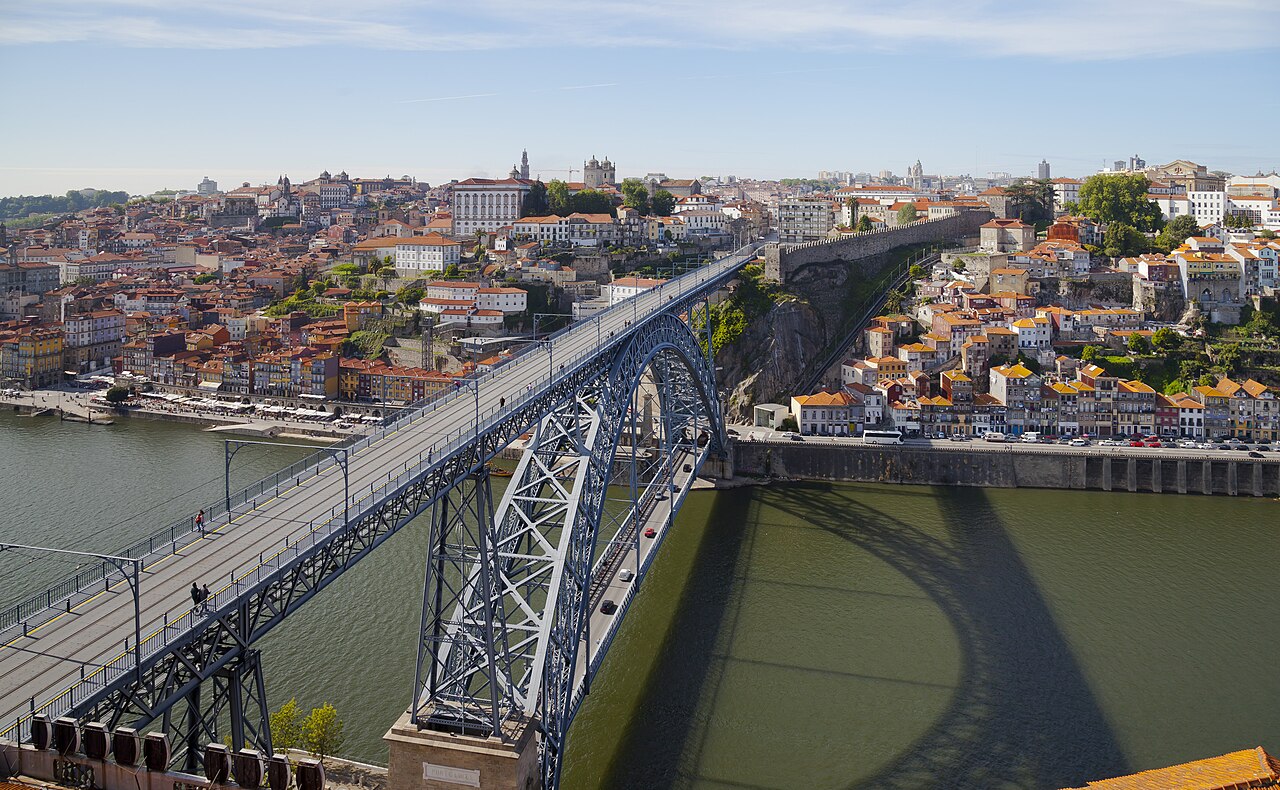
File:Pt-pt Porto FF.ogg thumb|right|View of Porto from south side. thumb|right|View of Porto houses Porto (POHR-too, /ˈpoɾ.tu/) was named by the Romans Portus Calle (the origin of the entire present country's name), the city is nowadays officially styled A muito nobre, sempre leal e invicta cidade do Porto (the very noble, always loyal, and undefeated city of The Harbor). This is usually shortened to "a Cidade Invicta" (the undefeated city) a title won because of Porto's unparalleled resistance against hostile troops during the 1820s.
Residents of Porto are nicknamed the Tripeiros, or tripe eaters, since the Portuguese conquest of Ceuta in North Africa in 1415, when the city's inhabitants went without meat in order to provision the fleet (which left from Porto), and had to subsist on tripe soup, which developed into a gastronomical specialty of the city. The city is quite varied architecturally, with medieval and modern buildings side by side.
Get in
thumb|400px|Aerial view of Porto and Douro River * , also known as Aeroporto do Porto or Aeroporto de Pedras Rubras | url=http://www.ana.pt/en-US/Aeroportos/porto/Porto/Pages/Homepage-Porto.aspx | email= | address= | lat=41.2367 | long=-8.6708 | directions=in Pedras Rubras, about 15 km from the city centre | phone= | tollfree= | fax= | hours= | price= | wikipedia=Porto Airport | image=Aeroporto Porto 17.jpg | wikidata=Q943743 | content=Porto International Airport is the second-busiest in Portugal, posting a very high proportion of flights and passengers for a European non-capital city. }} The business is due to Porto's particular economic importance and growing tourist interest, coupled with northern passenger logistical demand to fly out of Porto directly, instead of going by rail to Lisbon to get on a flight. As a result, Porto Airport is now Portugal's secondary hub for intercontinental flights to Brazil, North America and many European destinations by the Portuguese flag carrier TAP Portugal.
Other European airlines are increasingly offering flights to Porto from their main
Get around
thumb|Porto Valley Porto, like most Portuguese cities, is a nightmare to drive in. Roads vary in conditions - from fully paved to cobbled lanes that can make even the most shortest of distance seem like a go-kart rally.
With that said, keep in mind that the tourist parts of the city (the Ribeira and Baixa) are a never ending maze of narrow streets, short tempered drivers and snakelike alleys. Better to walk (despite the fact that it's very hilly).
Stay safe
There may be pickpockets in heavily crowded areas and on public buses and trains; however, pickpocketing is not common in Porto. Travelling by bus or metro is generally safe and one of the best ways to go from a place to another.
Porto is generally a safe place to be if you take normal precautions like walking in well-illuminated streets at night. One part of Porto, near the Tourist Information Office between the cathedral and the steps to the small church, often has drunk people that could cause you trouble.
Related guides
Helpful next pages for Porto.