
Sapporo 10-day itinerary
- Best for
- First-time visitors who want a full Sapporo trip with day trips.
- Pace
- Seven walking days, two day trips, and one slower day.
- Base
- City
- Estimated budget
- $800–$2,800
Day-by-day plan
Follow the stops in order. Walk times are estimates between nearby places.
- Day 1
City
Walk City in Sapporo. Start at Clock Tower, then Shiroi Koibito Park and Ōdōri Park. Stay on foot.
Stop 1
Clock Tower
This rather diminutive building has become a symbol of Sapporo, mostly by being the oldest building still standing. It was constructed in 1878 for the Sapporo Agricultural College (now the Hokkaido University) and would not look out of place in "Smalltown U.S.A." The inside has a small retrospective of its history.
Stop 2 · 97 min walk
Shiroi Koibito Park
Formerly "Ishiya Chocolate Factory". The factory has an incredibly corny, but fun, tour building up to a view of the actual chocolate making floor, and ending with a random toy museum. Also there are two restaurants, a souvenir store, and an hourly robot show complete with annoying music.
Stop 3 · 92 min walk
Ōdōri Park
Sapporo's most famous park, it is in the center of town and is considered to be a symbol of Sapporo. Although quite narrow (one might argue that it is a nice boulevard), the park is quite long, stretching over fifteen blocks across downtown Sapporo. Filled with (during the summer) numerous flowers, trees, and fountains, Ōdōri Park provides a welcome respite from the maddening crowds of the surrounding city. In winter, there's not much to see.
Stop 4 · 11 min walk
Sapporo TV Tower
A tourist trap carbon copy of the Eiffel Tower with an observation deck 90 m high.
Eat · Nijō Ichiba: Sapporo's equivalent to Tokyo's famed Tsukiji Fish Market, this is where the best of Hokkaido's catch is traded — and like its Tokyo counterpart, there are many restaurants here offering top-quality, cut-price sushi and sashimi. Popular with locals and tourists alike.
Browse Sapporo tours - Day 2
City
Walk City in Sapporo. Start at Sapporo Beer Museum, then Hokkaido Pioneer Village and Moiwayama. Stay on foot.
Stop 1
Sapporo Beer Museum
Run by the Sapporo Brewing Company, offers free self-guided tours or "premium" guided tours (only in Japanese, ¥500) covering the history of beer in Japan and the process of brewing. The museum is not very big and while the printed descriptions on the displays are in Japanese, cards are provided offering English translations. Two short movies about the history of the brewery also have English subtitles. At the end of the tour you can taste all the different beers.
Stop 2 · 143 min walk
Hokkaido Pioneer Village
A large historical village on the outskirts of Sapporo, offers a snapshot of Japan in the newly-industrialised age. The front gate (an old railway station) opens up into a series of opens alleys and buildings of the style pre-20th century. Also a variety of different gardens and shrines. Don't expect costumed performers however — everything is self-guided. An English map is available.
Stop 3 · 194 min walk
Moiwayama
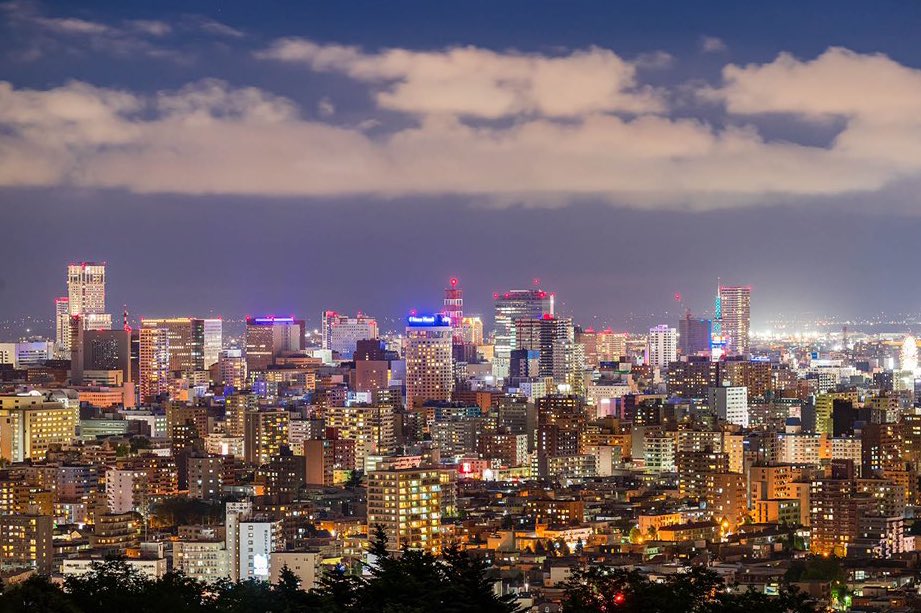
This mountain, also called Moiwa Mountain, overlooks the city and is especially worthwhile at night to observe the city lights.
Stop 4 · 27 min walk
Asahiyama Park
A beautiful flower garden and natural park that overlooks the city center. Noted for being a good place for romance, and is particularly good for cherry blossoms in spring and autumn colors, and local wildlife such as squirrels and foxes (somewhat of a feral pest around Sapporo).
Eat · Aji No Tokeidai: The best-known ramen noodle chain in Sapporo, now franchised around the country. Many famous people have eaten here including former Japanese prime minister, Tomiichi Murayama.
- Day 3
City
Walk City in Sapporo. Start at Hokkaido Shrine, then Jōzankei and JR Tower. Stay on foot.
Stop 1
Hokkaido Shrine
Hokkaido Shrine is a listed stop in this neighborhood.
Stop 2 · 265 min walk
Jōzankei
This area is famous for its onsen (due perhaps to proximity to Sapporo), and for the very beautiful autumn colours (especially around the Hōheikyō Dam). Accessible by public bus from the JR Sapporo station with multiple departures daily for ¥830 one-way.
Stop 3 · 312 min walk
JR Tower
The redeveloped building near JR Sapporo Station marks the center of the city. It is higher than the TV tower observatory is. Affording panoramic views. As a bonus for men, the observation level has a men's room with a view!
Stop 4 · 27 min walk
Hokkaido Museum of Modern Art
A modern museum filled with collections of contemporary works and especially glass objects, Pascin of École de Paris, as well as temporary exhibits. The main hall is the center of exhibits of works owned by the museum and the special facility is reserved for "expo" of foreign and Japanese arts. Each summer the museum holds a special course for children.
Eat · Ramen Yokochō: Also known as Ramen Gai, this alley is chock full of ramen shops of all varieties. Get butter corn ramen, crab ramen, and even scallop ramen. It's touristy but fun, and locals come here as well.
- Day 4
City
Walk City in Sapporo. Start at Snow Brand Milk Products Historical Museum, then Sapporo Art Park and Moerenuma Park. Stay on foot.
Stop 1
Snow Brand Milk Products Historical Museum
Large museum on the premises of Snow Brand Milk Products factory, where the company first produced butter in 1925. After learning about dairy farming and milk products, visitors can sample ice cream and milk made at the factory.
Stop 2 · 201 min walk
Sapporo Art Park
Containing over 74 modern and contemporary sculptures, this art park makes for a great day trip.
Stop 3 · 289 min walk
Moerenuma Park
A popular excursion for Japanese families, this park offers several acres of carefully manicured grass and monumental landscape installations. Highlights include a 5-story glass pyramid and a man-made mountain, from which one can see all of Sapporo. Rental of bicycles is available, from 07:00-19:00.
Stop 4 · 130 min walk
Hokkaido University Botanic Garden
A large botanical garden. There are two rock gardens, a rose garden, a lilac display, a greenhouse, and various other gardens. There's a small museum in the garden with artifacts from Hokkaido, some dating back to the Meiji period (no extra cost). In the winter, only the greenhouse and museum are of interest.
Eat · Sapporo Beer Garden: At the same location as the Beer Museum is the Beer Garden, an incredibly popular Genghis Khan (mutton barbeque) restaurant. Even though the dining rooms span three large buildings, come early and expect to wait.
- Day 5
City
Walk City in Sapporo. Start at Former Hokkaido Prefectural Government Building, then Hokkaido Museum and Hokkaido University. Stay on foot.
Stop 1
Former Hokkaido Prefectural Government Building
This beautiful western-style red brick building is a famous site of Sapporo and worth taking a quick look, as it is in the center.
Stop 2 · 163 min walk
Hokkaido Museum
The Hokkaido Museum traces the natural and human history of Hokkaido, from its prehistoric environment and indigenous Ainu culture to the island's development and colonisation by Japan from the 19th century. Exhibits cover wildlife, archaeology, Ainu life, the Matsumae period and the rapid settlement and industrialisation of Hokkaido. Located beside the Historical Village of Hokkaido, it makes an excellent companion to the open-air museum.
Stop 3 · 172 min walk
Hokkaido University
Hokkaido University occupies a large, attractive campus in central Sapporo and grew from the Sapporo Agricultural College, founded in 1876 with strong American influence. It was one of Japan's first modern institutions of higher education and played an important role in the development of Hokkaido. The campus retains several historic buildings, including the Sapporo Agricultural College Farm, and has broad tree-lined grounds that make it pleasant to explore on foot.
Stop 4 · 44 min walk
Hōheikan
The Hōheikan is a distinctive Western-style building constructed in 1878 as Sapporo's first hotel and guesthouse for government officials. Its blue-and-white exterior reflects the American influence on early Sapporo, while the interior contains period furnishings and exhibits on the building's history. It now stands in Nakajima Park.
Eat · Romantei: One of the most popular sweets shops. Famous for its Chocolate Mont Blanc, a delicious concoction of sponge cake, whipped cream and ganache. Other delectables include cream puffs, apple pie, and strawberry Bavarian. Located at Moiwa Mountain.
- Day 6
City
Walk City in Sapporo. Start at Sapporo Shiryokan, then Sapporo Fushimi Inari Shrine and Nakajima Park. Stay on foot.
Stop 1
Sapporo Shiryokan
The Sapporo Shiryokan, built in 1926 as the Sapporo Court of Appeals, is a handsome Western-style brick building in Odori Park. It now houses exhibits on Sapporo's history and the judicial system, and is notable as one of the city's surviving Taishō-period buildings.
Stop 2 · 37 min walk
Sapporo Fushimi Inari Shrine
Sapporo Fushimi Inari Shrine is a hillside Shinto shrine known for its long row of red torii gates climbing through the forest on the slopes of Mt Moiwa. Founded in 1907, it is a pleasant combination of shrine, woodland walk and mountain scenery, and is quieter than Kyoto's famous Fushimi Inari.
Stop 3 · 36 min walk
Nakajima Park
Nakajima Park is a large, attractive park south of central Sapporo, centred on a pond and surrounded by mature trees. It contains the historic Hōheikan, the Hassō-an tea house and the Sapporo Concert Hall, with pleasant walking paths and seasonal autumn colours.
Stop 4 · 29 min walk
Sapporo Factory / former Kaitakushi Brewery
Sapporo Factory occupies the site of the Kaitakushi Brewery, established in 1876 as one of Japan's earliest modern breweries and the predecessor of Sapporo Beer. The original red-brick brewery buildings have been incorporated into a large shopping and entertainment complex, with some historical displays recalling the site's brewing history.
Eat · Cafe Phyton: This small coffee shop has freshly made specialty coffees and a few Belgian beers by the bottle.
- Day 7
City
Walk City in Sapporo, including Sapporo Ainu Culture Promotion Center.
Stop 1
Sapporo Ainu Culture Promotion Center
Sapporo Pirka Kotan is an open-air museum and cultural centre introducing the traditional life, culture and history of the Ainu, the Indigenous people of Hokkaido. Traditional buildings, tools, clothing and other exhibits illustrate everyday life and crafts, with demonstrations and cultural activities sometimes held on site.
Eat · Soup Curry Garaku: The original outlet of Sapporo's most famous soup curry chain, now franchised worldwide. The soup here is complex and aromatic, and even the basic bowl is packed to overflowing with a whole chicken leg and vegetables. You can customize your spice level between 1 and 40.
- Day 8
Day trip toward Otaru
Leave Sapporo for the day. Come back to the same bed.
Stop 1
Otaru
Listed as a next stop from Sapporo. Check the regional train or bus the night before.
Stop 2
Niseko
Listed as a next stop from Sapporo. Check the regional train or bus the night before.
Stop 3
Shikotsu-Toya National Park
Listed as a next stop from Sapporo. Check the regional train or bus the night before.
Eat · Pack snacks from town. Do not count on a full menu at a small station.
Browse Otaru day trips - Day 9
Day trip toward Niseko
A second day outside Sapporo. Keep the same hotel base.
Stop 1
Niseko
Listed as a next stop from Sapporo. Book the earliest practical train or bus.
Stop 2
Shikotsu-Toya National Park
Listed as a next stop from Sapporo. Book the earliest practical train or bus.
Stop 3
Asahikawa
Listed as a next stop from Sapporo. Book the earliest practical train or bus.
Eat · Eat near the station before you leave. Plan dinner back in Sapporo.
Browse Niseko day trips - Day 10
Do one thing slowly
No new neighborhood. Use the spare day on a single activity.
Stop 1
Sapporo Snow Festival
This is Sapporo's largest event. The festival is best known for the ice sculpture competition attracting artists from around the world, competing to create the largest and most elaborate artworks from ice and snow. The festival is focused on Odori Koen, in the centre of Sapporo. It consists of a combination of large-scale replicas and artistic sculptures; children-aimed attractions; and a separate section for world-wide competitors (where you can see a wide range of smaller artistic sculptures).
Stop 2
Mt. Teine
A ski mountain within easy drive from most of Sapporo. This ski mountain featured in the 1972 Winter Olympics. Offers a good mix of beginner and experienced slopes (in two distinct parks; Highlands and Olympia which are connected). You can purchase a Skip (スキップ sukippu, ski + trip) ticket at any JR ticket office for roughly ¥4500 (depending on which station you start from) that includes roundtrip train tickets to JR Teine station, roundtrip bus tickets from Teine station to the ski area, and a four-hour lift ticket
Stop 3
Skiing
As befits a former Winter Olympics site, Sapporo is famous for its ski resorts, which are easily accessible by bus. Niseko, one of Japan's top destinations for powder, is two hours away by bus.
Stop 4
Hoheikyo Onsen
Probably the most beautiful outdoor hotspring that is easily accessible from Sapporo. Separate areas for male and female guests offer an indoor bathing area and a large outdoor pool with mountain view. Massage, a beer bar and a restaurant (Indian curry or Japanese soba) are available on site. A free shuttle bus departs daily from Makomanai subway station (in front of the middle school) at 10:00 and returns from Hoheikyo to Makomanai at 15:00 (Service stopped since Oct 22, 2022 according to their website).
Eat · Go back to a place that already worked.
Where to stay
Sleep near the walking base. Pick an area, then search hotels by neighborhood.
Budget
First stay
From approximately the last week of April through the first week of November, there is a campground in Takino with the facilities you would expect in a suburban campground: a playground, restrooms, a cooking area, water, public phones, vending machines, shower
Mid-range
First stay
Midrange western-style rooms with bathroom. There is a computer with internet for use in the lobby.
Splurge
First stay
This hotel was built in 1934 and is a historical monument in itself. Although some of the rooms are rather aged, it is a stylish hotel.
Things to book
Tours and tickets that match this plan. Book anything that needs timed entry.
Budget
Rough mid-range spend for 10 days in Sapporo, excluding long-haul flights. Hotel nights drive most of the range.
- Budget: about $800 (hostel/budget hotel, transit, street food)
- Mid-range: about $1,400 (3★ hotel, sit-down meals, a tour or two)
- Comfort: about $2,800 (nicer hotel, taxis, paid attractions)
Transportation
Get in
Sapporo is Hokkaido's main transport hub. Sapporo ( for all airports) is served by two airports. Most international and inter-island flights to go the larger but further away New Chitose Airport, while most intra-island flights go to the smaller but closer Okadama Airport. * , SE of the city in Chitose, best reached by train or shuttle bus.
Get around
thumb|Sapporo TV Tower at night Most unusually for a Japanese city, Sapporo is logically organized thanks to its strict grid system. The main thoroughfare, the leafy Ō-Dōri (大通り, literally "Big Street"), runs east-west across the city and divides the city into North and South, while Sōsei-Gawa (創成川, literally "Creation River") divides the city into West and East, running under the main street Eki-Mae-Dōri (駅前通, literally "In Front of the Train Station Road"). The address of every block in the center is thus of the type "North X West Y" (prominently signposted at all intersections), making navigation a snap. However, most businesses provide maps to their location, building names or landmarks, because the address "North X West Y" or the like simply means that the place you are trying to find will be somewhere in the block, and blocks in the center of the city can be quite large! Two public transportation smart cards are sold in the Sapporo area; JR Hokkaido's Kitaca and the Sapporo City Transportation Bureau's SAPICA.
Where to eat
Simple meal ideas near the day’s walking route.
Nijō Ichiba
Sapporo's equivalent to Tokyo's famed Tsukiji Fish Market, this is where the best of Hokkaido's catch is traded — and like its Tokyo counterpart, there are many restaurants here offering top-quality, cut-price sushi and sashimi. Popular with locals and tourists alike.
Aji No Tokeidai
The best-known ramen noodle chain in Sapporo, now franchised around the country. Many famous people have eaten here including former Japanese prime minister, Tomiichi Murayama. Miso ramen is the most popular dish, but if you want something special, order the batā-kōn ramen, a Hokkaido specialty made with a hearty broth of corn and butter.
Ramen Yokochō
Also known as Ramen Gai, this alley is chock full of ramen shops of all varieties. Get butter corn ramen, crab ramen, and even scallop ramen. It's touristy but fun, and locals come here as well.
Sapporo Beer Garden
At the same location as the Beer Museum is the Beer Garden, an incredibly popular Genghis Khan (mutton barbeque) restaurant. Even though the dining rooms span three large buildings, come early and expect to wait. The restaurant offers a 100-minute all-you-can-eat-and-drink plan, as well as à la carte. Bibs are provided, because the food can get rather messy.
Romantei
One of the most popular sweets shops. Famous for its Chocolate Mont Blanc, a delicious concoction of sponge cake, whipped cream and ganache. Other delectables include cream puffs, apple pie, and strawberry Bavarian. Located at Moiwa Mountain. There is also a takeaway shop at Tokyu Department Store, right outside Sapporo Station.
Cafe Phyton
This small coffee shop has freshly made specialty coffees and a few Belgian beers by the bottle.
Soup Curry Garaku
The original outlet of Sapporo's most famous soup curry chain, now franchised worldwide. The soup here is complex and aromatic, and even the basic bowl is packed to overflowing with a whole chicken leg and vegetables. You can customize your spice level between 1 and 40.
Yakiniku Dining MEGUMI Minamihachijoten
Yakiniku Dining MEGUMI Minamihachijoten is a listed stop in this neighborhood.
Before you go
Questions
- Do I need a car in Sapporo?
- No for this plan. The days stay inside walking range, then local transit to XXX. thumb|Sapporo TV Tower at night Most unusually for a Japanese city, Sapporo is logically organized thanks to its strict grid system. The main thoroughfare, the leafy Ō-Dōri (大通り, literally "Big Street"), runs east-west across the city and divides the city into North and South, while Sōsei-Gawa (創成川, literally "Creation River") divides the city into West and East, running under the main street Eki-Mae-Dōri (駅前通, literally "In Front of the Train Station Road"). The address of every block in the center is thus of the type "North X West Y" (prominently signposted at all intersections), making navigation a snap. However, most businesses provide maps to their location, building names or landmarks, because the address "North X West Y" or the like simply means that the place you are trying to find will be somewhere in the block, and blocks in the center of the city can be quite large! Two public transportation smart cards are sold in the Sapporo area; JR Hokkaido's Kitaca and the Sapporo City Transportation Bureau's SAPICA.
- Is 10 days enough?
- Yes if you want Sapporo plus day trips. Use the 5-day plan if you will stay in town.
- Where should I stay?
- Base near City so the first walking day starts at the hotel. Auto Resort Takino is a listed option, not a ranking.
- Where do I eat?
- Each day names one sit-down stop. Nijō Ichiba is on the list. Keep the rest as bakeries and market counters.
Other Sapporo trip lengths
- Where to stay in Sapporo
- Best time to visit Sapporo
- eSIM for Japan
- Travel insurance for Japan
- Airport transfers
Daily stops compiled from Wikivoyage (CC BY-SA), and Wikipedia. Updated 2026-10-07. Edited by Lina Varela.